Sound therapy in brief
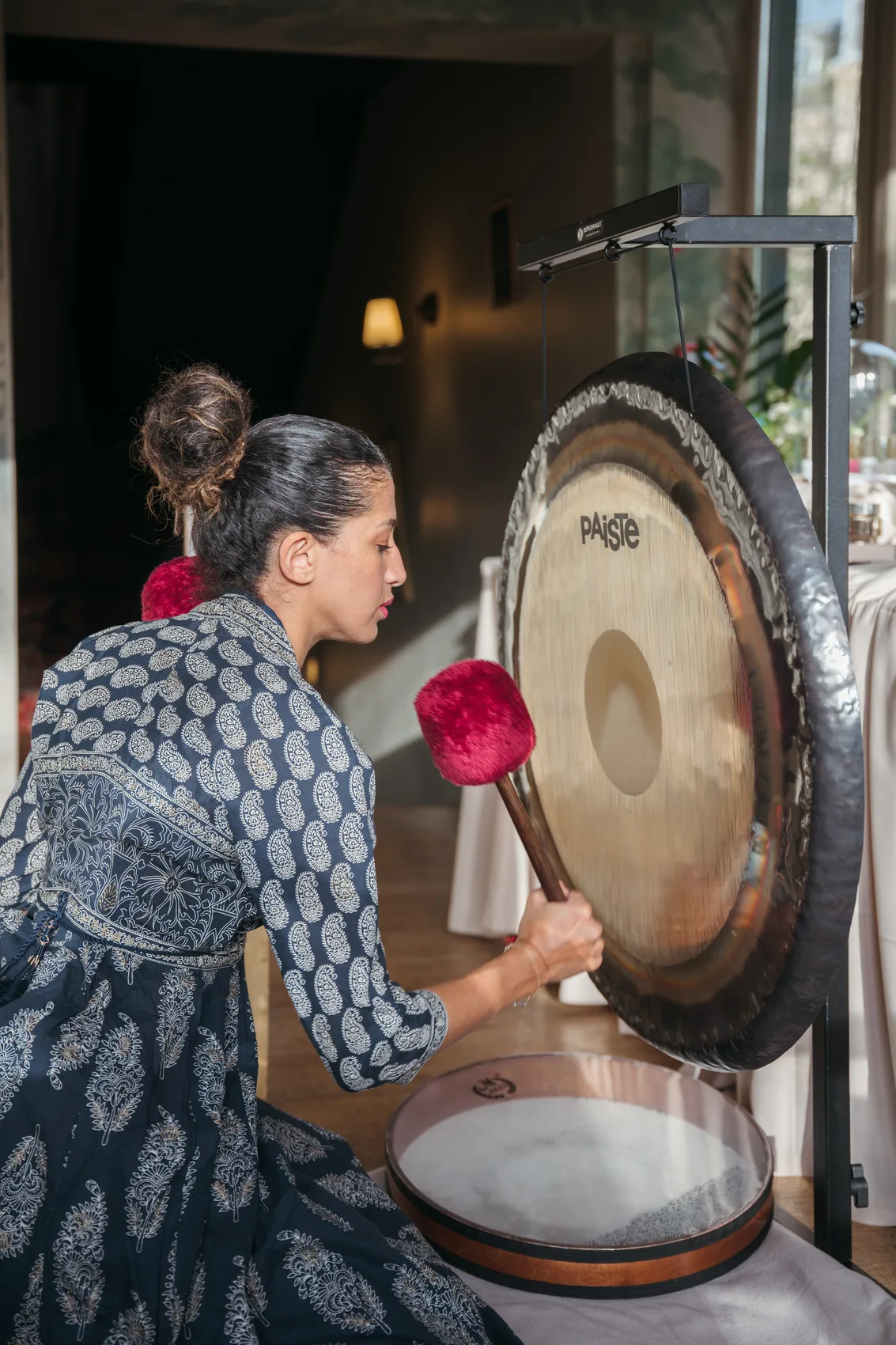
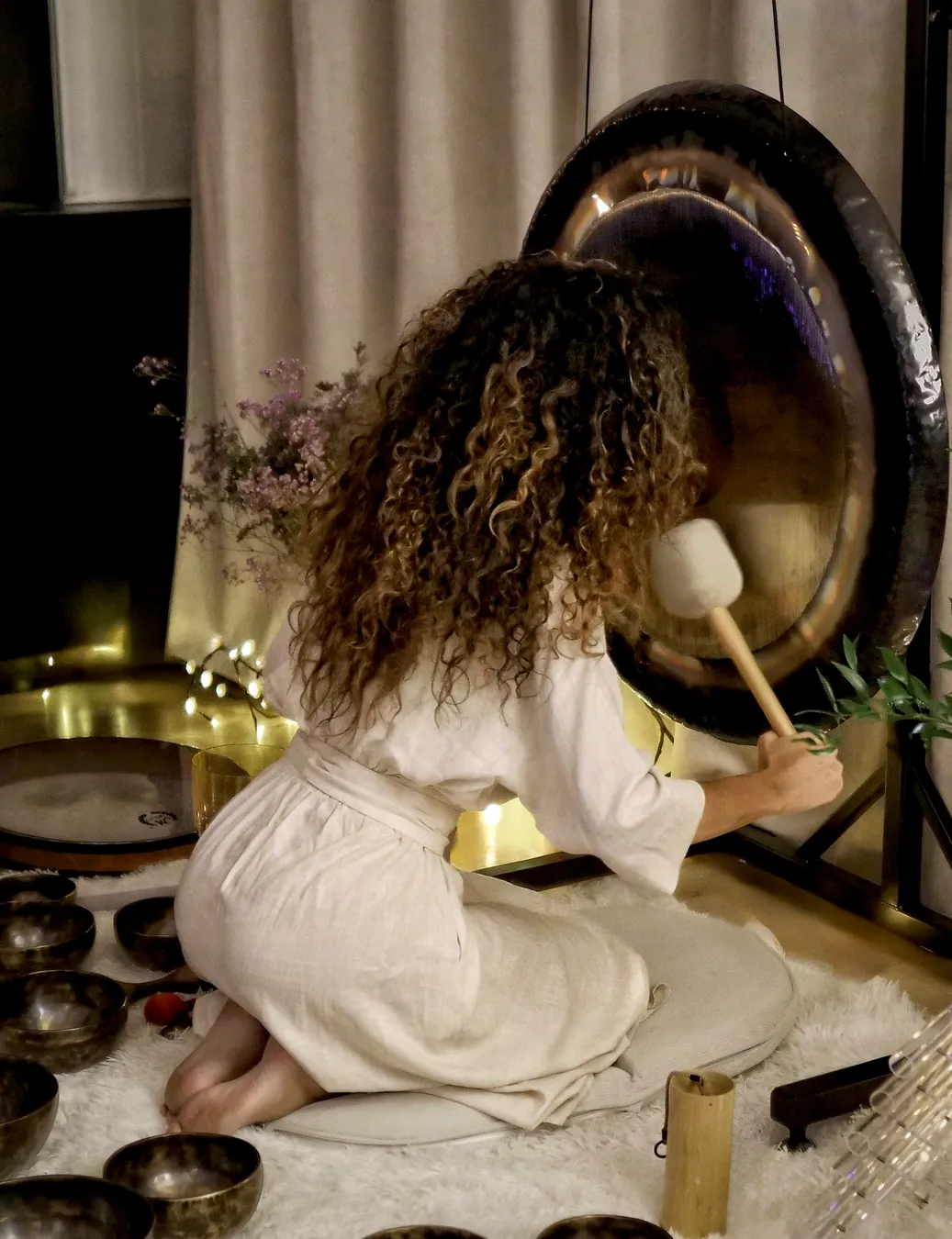
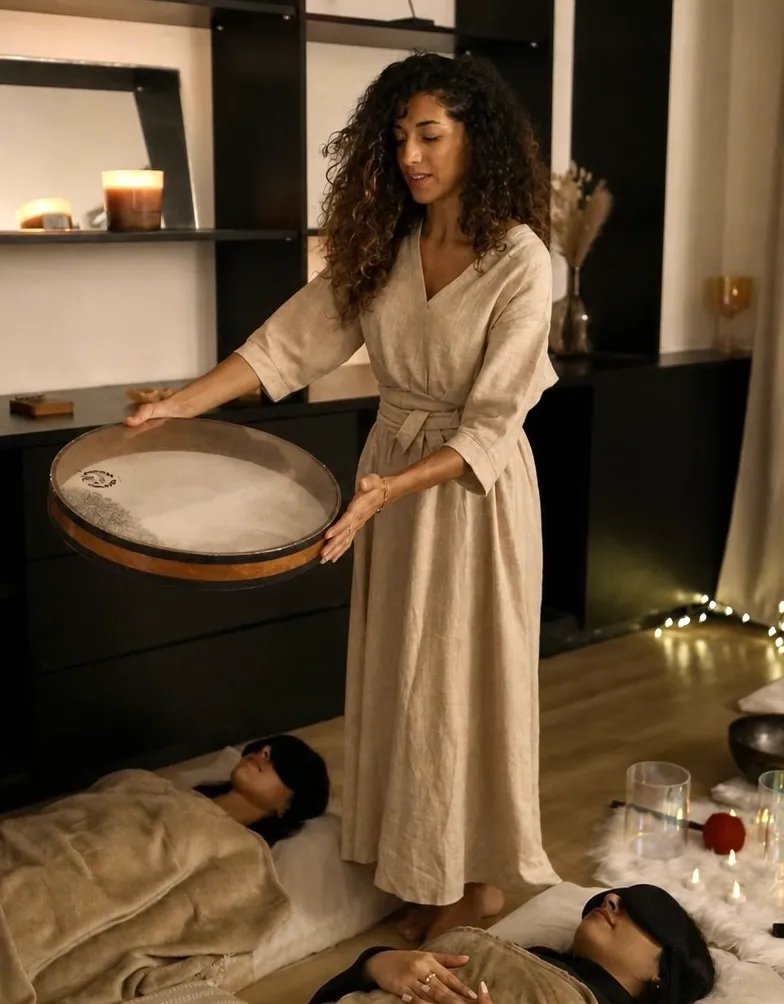
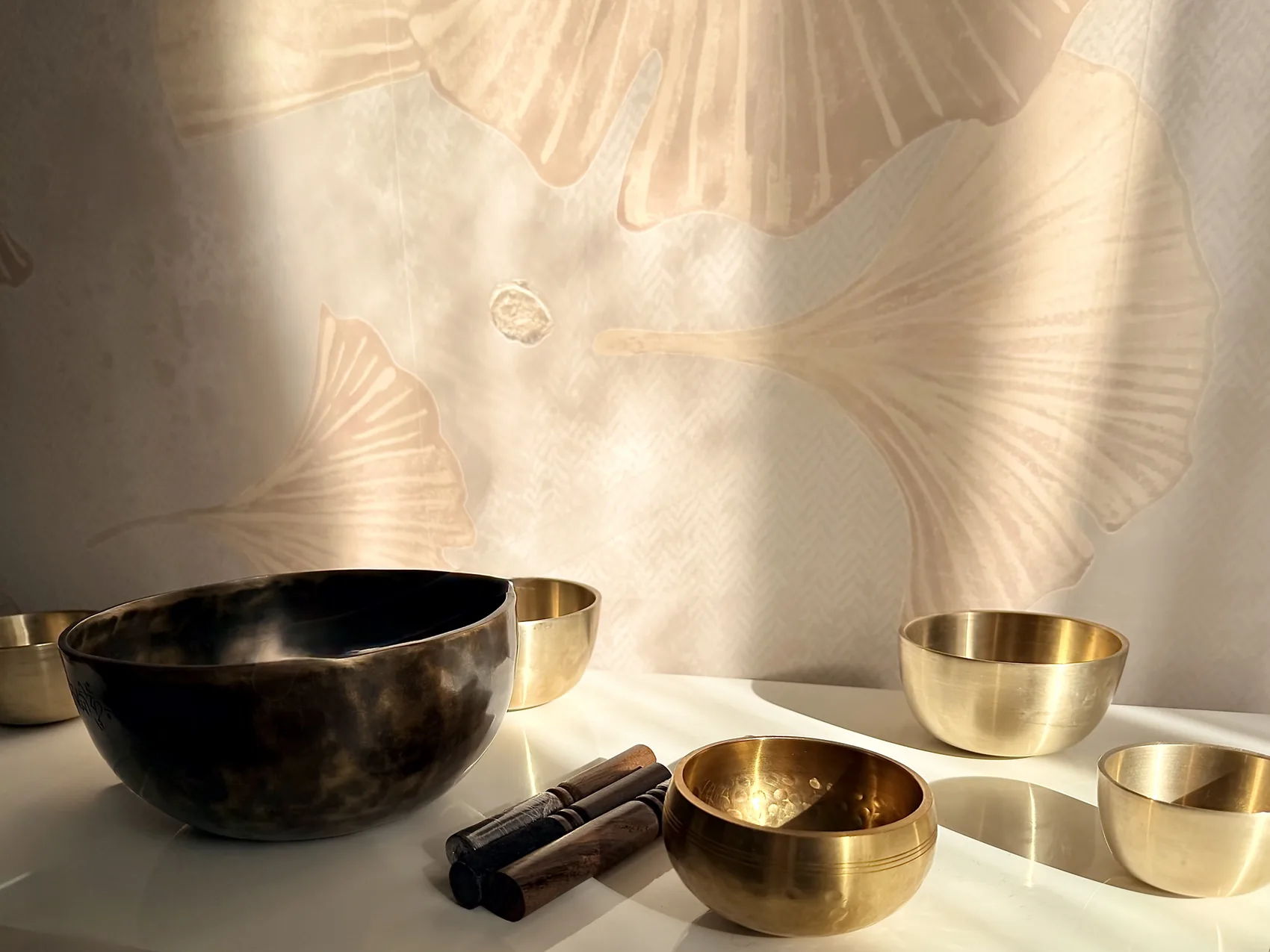
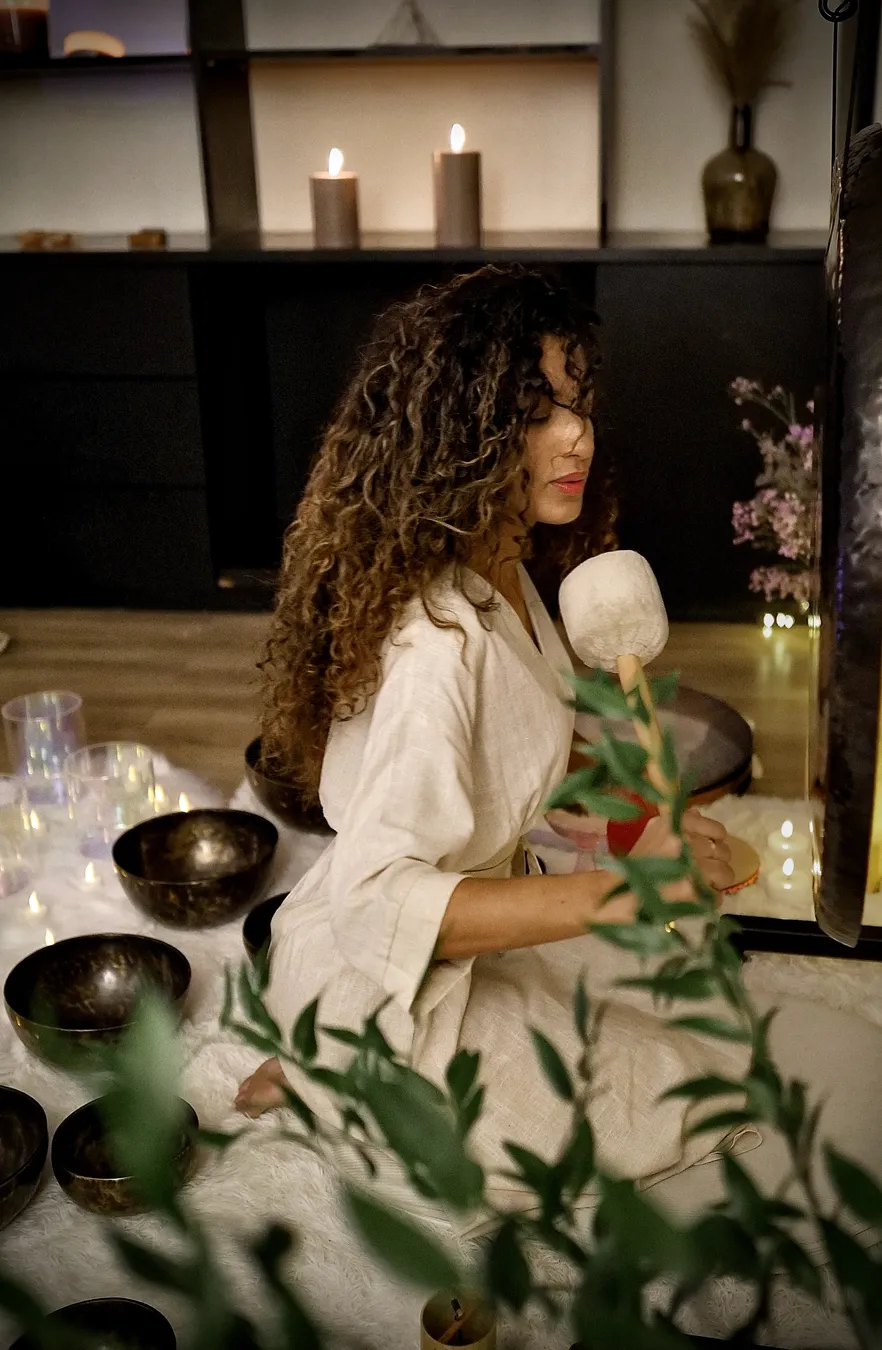
Sound therapy is a wellbeing practice that uses sound and vibration (gong, Tibetan bowls, chimes) to help the nervous system slow down. You stay lying down, still, covered; there's nothing to do and nothing to get right. It's the method behind all our formats, from the group gong bath in Paris to the one-to-one sound massage. At Résonance a session lasts around an hour, in a group (seven people at most, from €39) or one to one (from €95), at 26 rue de Bassano, a short walk from Trocadéro.
- ≈ 1 hrsession length
- from €39in a group
- from €95one to one
- 5.0 ★63 Google reviews
The method
How does sound act on the nervous system?
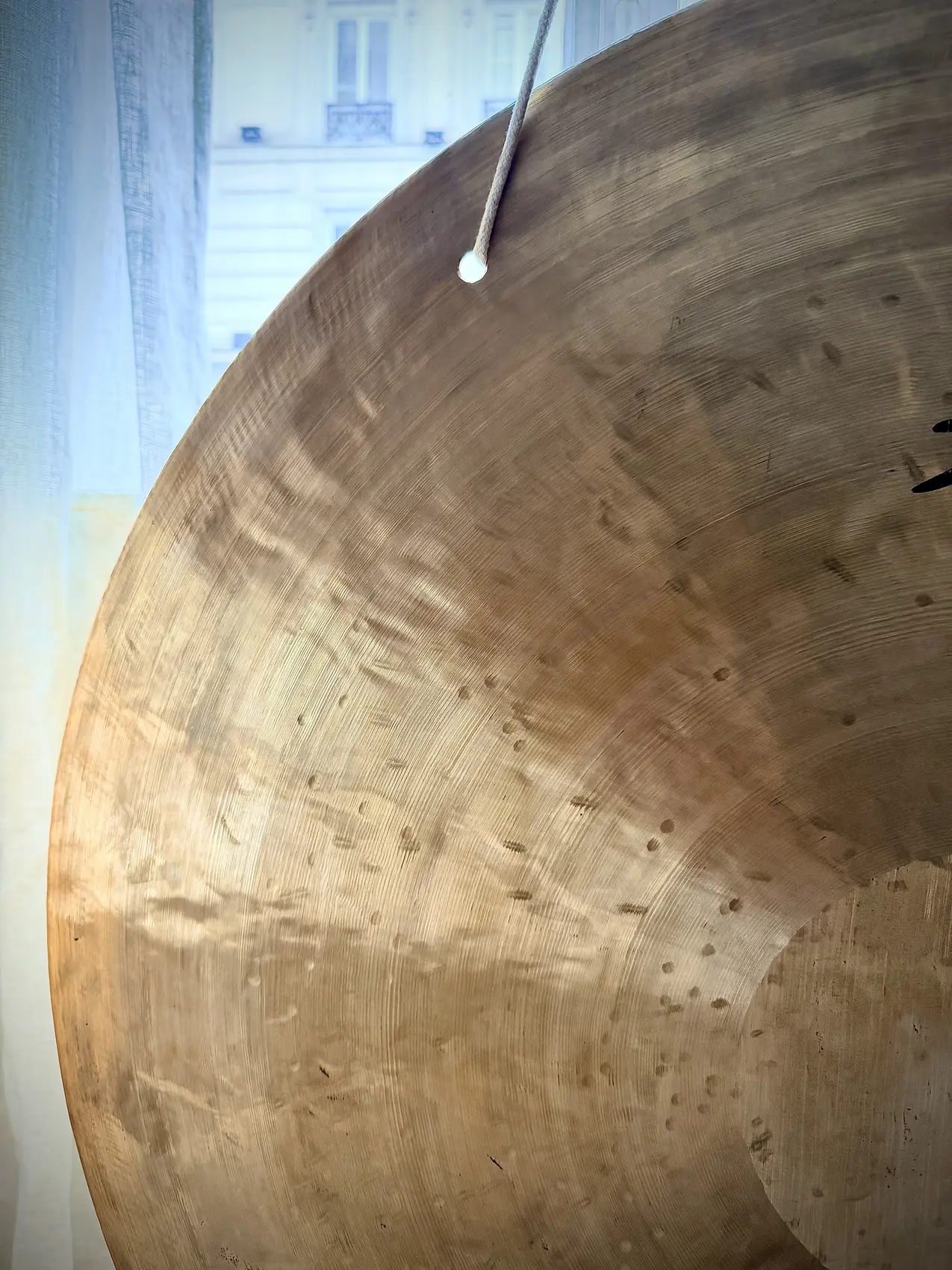
The principle is simple, almost mechanical. When you're lying down and the waves of the gong fill the room, attention has something to hold onto. The mind stops circling. And as soon as the brain registers that there's no danger (no movement, no decision to make), it gives the body permission to let go. The breath lengthens. The heart rate drops. This is the shift from “alert” to “rest”, the state in which recovery becomes possible.
Nothing magical about it. We don't promise a guaranteed result: we set up the right conditions, and the nervous system takes it from there. You can do this in company at a group session, or face to face in a private session when you'd like a more personal setting.
- Breathing. The breath lengthens as attention settles on the sound.
- Heart rate. The heart slows once the brain registers that there's no danger.
- The switch. Moving from “alert” to “rest”, the state in which recovery becomes possible.
How do you feel afterwards?
It varies from person to person. Some leave light, almost floating; others mostly notice an unfamiliar calm, the way you feel after a long walk. It's not unusual to sleep better the following night, or to find your shoulders have dropped a notch without your deciding it. Some people also find emotions surfacing during the immersion: that's normal, and the setting is built to hold them.
Now the part most places skip. Sound therapy doesn't cure anxiety, it doesn't treat depression, and it is not a replacement for therapy. What it does offer is sensory rest and some help regulating stress. For the circumstances in which the practice isn't advised, read the safety & care page carefully before booking.
Group, one to one or sound massage: which session?
Sound therapy comes in several formats. All rest on the same principle. None of them feels quite like the others.
| Format | Gong bath (group) | Private session (one to one) | Sound massage |
|---|---|---|---|
| Setting | Group, max 7, lying down | One to one, lying down | One to one, lying down |
| Personalisation | A shared session | Adapted to your need | Bowls placed on the body |
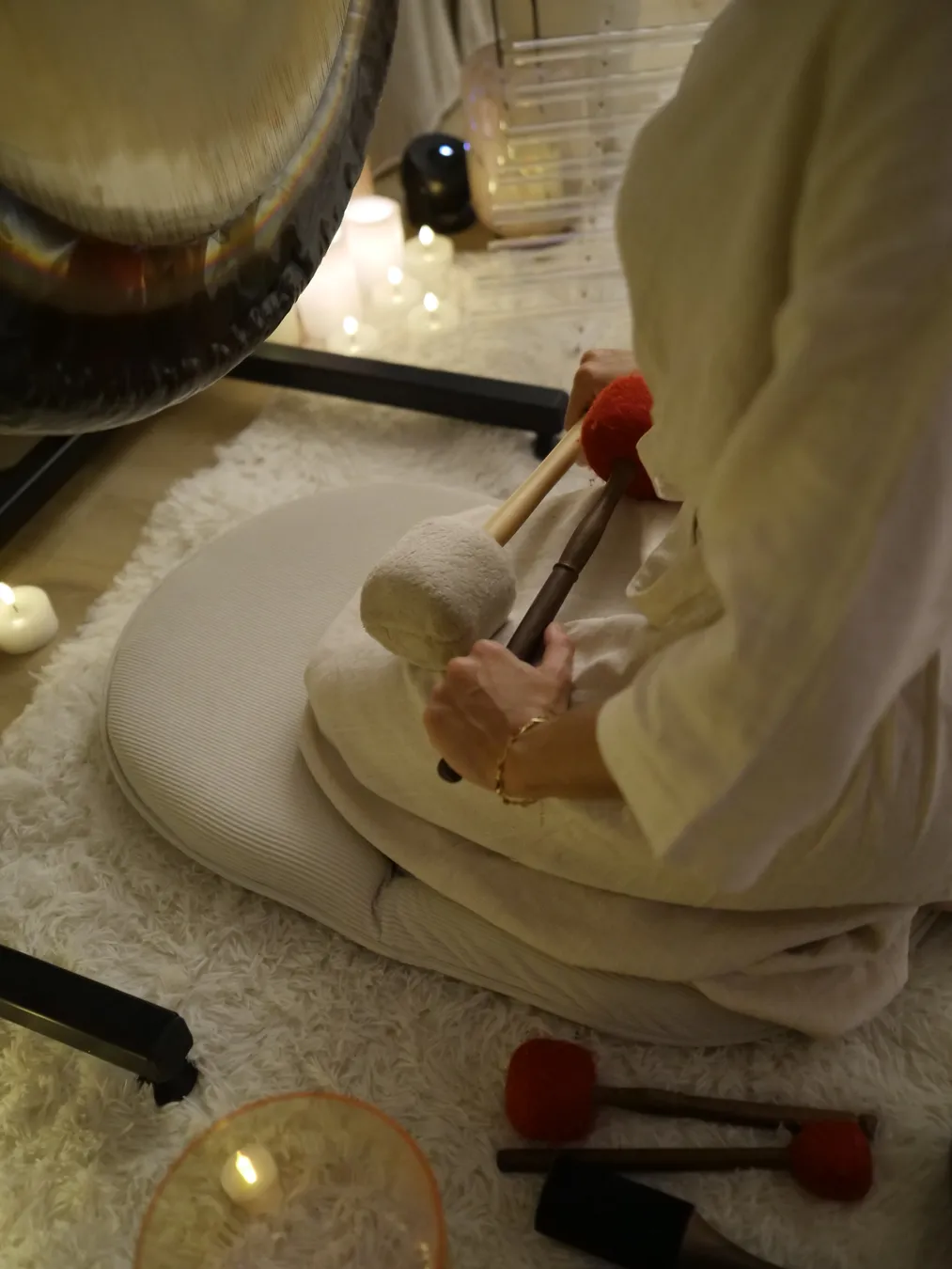
| Instruments | Gong, bowls, chimes | Depends on the session | Tibetan bowls, through contact |
| Length | ≈ 1 hr | ≈ 1 hr | ≈ 60 min |
| Best for | Trying it, switching off | Targeted support | Physical release |
| Price at Résonance | from €39 | from €95 | €95 |
If you're coming with someone, the duo session does the same thing for two, and private hire of the studio brings together up to 8 people. Every option is on the experiences page.
The neighbourhood
Sound therapy between Étoile and Trocadéro
The studio is at 26 rue de Bassano, on the border of the 16th and the 8th, between the Champs-Élysées and place Victor Hugo. It's a neighbourhood of tight calendars: head offices, fashion houses, private practices. Setting an hour of silence down in the middle of that density changes the texture of the day.
People walk over from Trocadéro and Passy, come by metro to George V (line 1), Iéna or Alma-Marceau (line 9), or on the RER A to Charles-de-Gaulle–Étoile. Many book an end-of-day session, then walk home along the avenues without hurrying. Opening hours and access are on the studio page; for anything else, the contact page is the simplest route.
- Address. 26 rue de Bassano, on the border of the 16th and the 8th.
- Getting here. Metro George V, Iéna, Alma-Marceau; RER A at Charles-de-Gaulle–Étoile.
- Close by. The Trocadéro, Passy and the Champs-Élysées.
How much does sound therapy at Résonance cost?
Passes of 3, 5 and 12 sessions, the duo session and the corporate formats are set out on the pricing page. To give a session, see the gift card.
What participants say
“A wonderful session with Zahra that truly transported us. Everything flowed smoothly, gently, and with a great deal of guidance. I highly recommend her.”
kevin lederman · Google · 5 ★
“Thank you for this wonderful trip!”
Yiping WANG · Google · 5 ★
“A truly original and delightful experience, a unique moment of relaxation with Zahra. Her gentle touch and the soothing sounds of the instruments allow you to drift away and let go. I've recommended i…”
Marie Dupont · Google · 5 ★
Résonance is rated 5.0 from 63 Google reviews, led by Zahra Youmni, sound therapist and hypnotherapist. More feedback on the reviews page.