The essentials, in brief
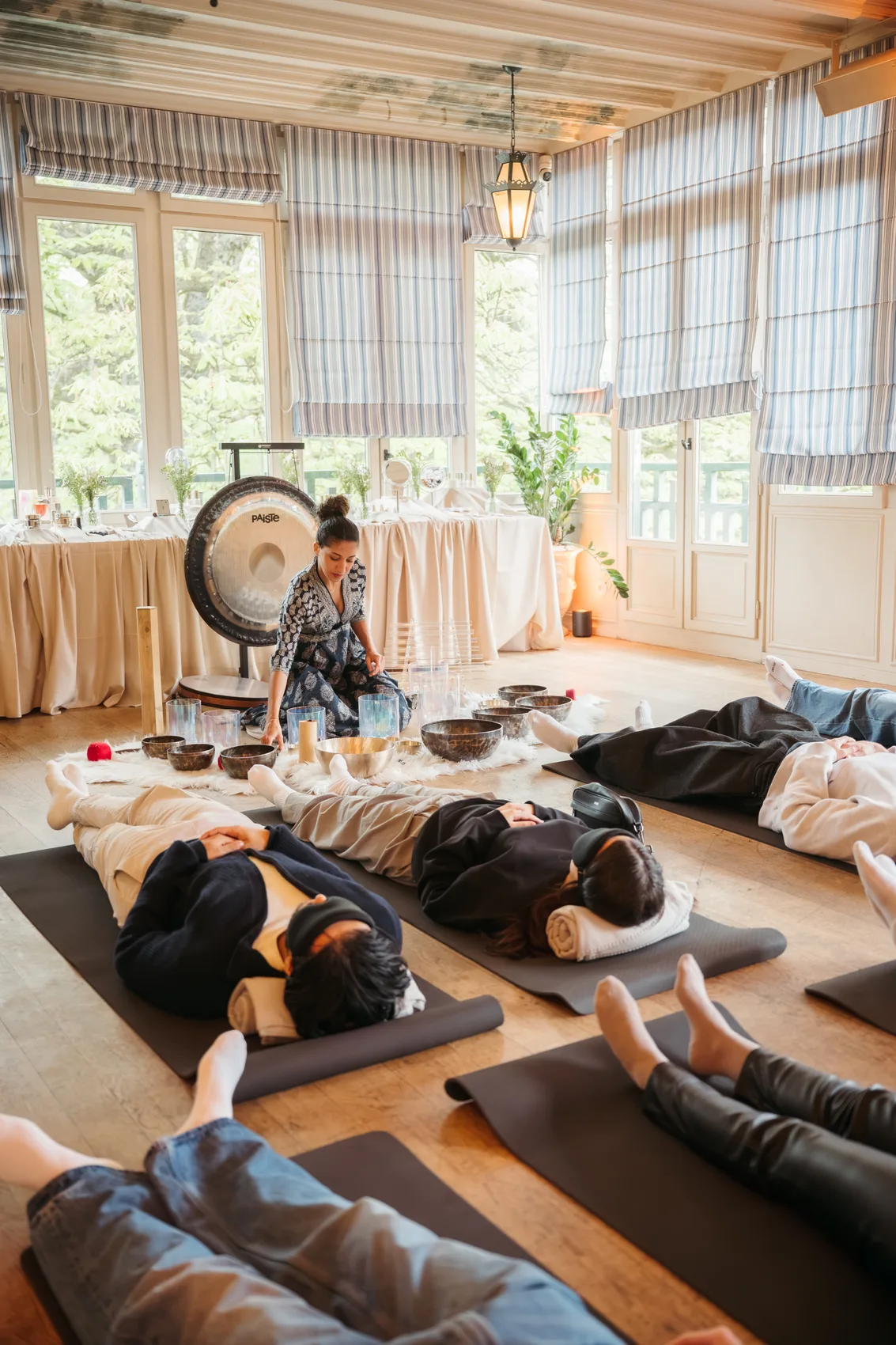
A sound bath is a gentle experience, but it isn't an experience for everyone, all the time. A gong bath is not advised if you have epilepsy, a pacemaker, severe hearing conditions or hearing implants, psychosis that isn't currently stable, and during the first trimester of pregnancy or from the eighth month. If you're unsure, your doctor's view takes precedence over ours. Otherwise it's simple: you stay lying down, covered, for around an hour, in a group of seven people at most, at 26 rue de Bassano. We promise no results and treat nothing. We get the conditions right; your body does the rest of it.
- max 7small group, lying down
- ≈ 1 hrsession length
- 0medical promises
- 0experience required
Precautions
What are the contraindications?
Sound does something genuinely physical to the body: the waves of the gong are felt as much as they're heard. That's why some situations call for caution. A gong bath is not advised in the following cases.
This list isn't here to alarm anyone. It exists so the session stays what it should be: safe. If one of these points applies to you, speak to your doctor first, then write to us via the contact page. We'll answer straight.
- Epilepsy. sound and rhythmic stimulation can be a trigger.
- A pacemaker. as a precaution against low frequencies and vibration.
- Severe hearing conditions or hearing implants. prolonged sound exposure isn't indicated.
- Psychosis that isn't currently stable. sensory immersion and deep rest can be destabilising.
- Pregnancy. not advised in the first trimester or from the eighth month; in between, ask your midwife or doctor if in doubt.
Situation by situation: what do we recommend?
A quick reference. When in doubt, medical advice always has the last word.
| Situation | Recommendation |
|---|---|
| Epilepsy | Not advised |
| Pacemaker | Not advised |
| Severe hearing conditions / hearing implants | Not advised |
| Psychosis that isn't currently stable | Not advised |
| Pregnancy: first trimester / from the eighth month | Not advised (medical advice if in doubt) |
| Tinnitus, hearing aid | Possible, tell us when you arrive |
| Stress, tiredness, restless sleep | Welcome |
| First time / no experience | Welcome, no prerequisites |
Want to understand how a session runs first? It's all explained on the gong bath in Paris page, and sound therapy sets out how sound reaches the nervous system.
What to expect during the session
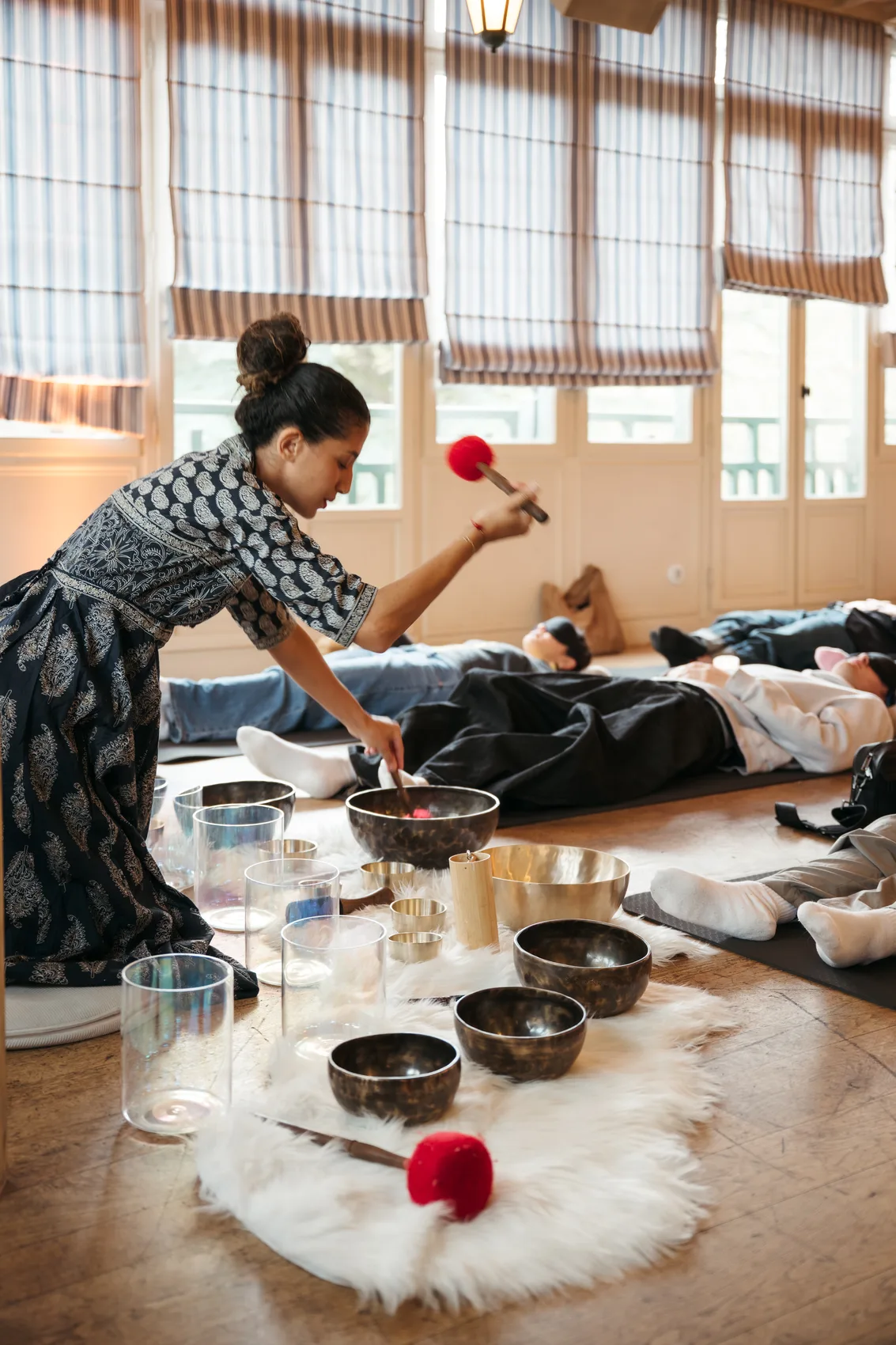
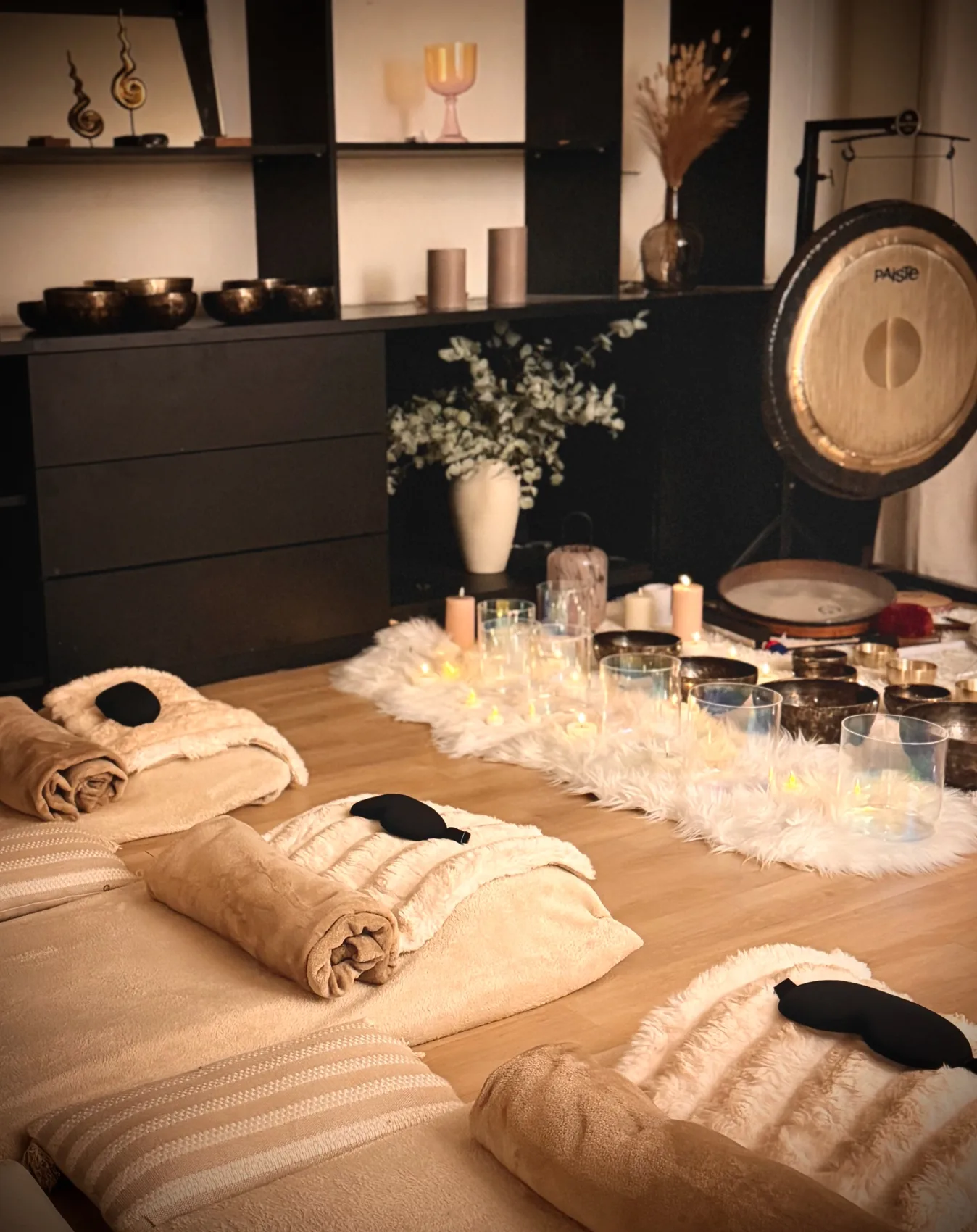
You're welcomed quietly and settled on a mat on the floor, with a blanket and a cushion. Then the quiet settles, and the first sound rises. During the immersion there's nothing to get right: you listen, you breathe at your own pace. Some people fall asleep. Others feel a wave of emotion rise and then subside. Many feel “nothing spectacular”, and that's fine too. Whatever happens, happens when you stop trying, not when the sound gets louder.
If at any point you're too warm, too cold, or simply need to move, do. You can sit up or step out whenever you like. The session follows four simple movements (breathe, connect, release, restore) and closes with a gradual return before you meet the street again.
Who is it for?
For anyone who wants to genuinely slow down, without having to learn anything.
The sound bath is as much for complete beginners as for regulars. There's no posture to hold, no breathing to master, no belief to share. The studio is meant to be welcoming to everyone: our space is explicitly women-owned, LGBTQ+ friendly and a safe space. The studio is on the ground floor: for anything accessibility-related, contact us so we can prepare for your visit properly. If you're coming as a pair, the duo session takes exactly the same thing into a private room; for tailored support, see the private session.
When is it better to ask a doctor?
The rule is simple: when in doubt, check first. Seek medical advice if you're pregnant, if you have a cardiac or neurological condition, if you have an implanted medical device, if you're on psychiatric medication, or if you've recently had surgery. It isn't the session that decides, it's your doctor. And if the answer is “not now”, we'll accept that without argument.
What we promise, and what we don't
Sound isn't medicine. It's a setting of conditions.
We don't claim to cure anxiety, treat depression, repair trauma or replace medical or therapeutic care. Nor do we guarantee that you'll sleep better or that your stress will disappear. That would be dishonest. What we do know how to do is hold a room: calm, clean, precise where your nervous system can finally let go. The body doesn't need convincing, only putting in the right conditions.
Put another way: we set the room up, and your nervous system takes it from there. We'll happily talk about relaxation, stress regulation, sensory rest and emotional decompression. No miracle, no magical transformation. To see the formats and their prices, go to the pricing page.