Short answer
For a first sound bath: come in comfortable, warm clothing, arrive 5 to 10 minutes early, and bring nothing in particular. Everything is provided. A session lasts around an hour: welcome, a short introduction, sound immersion, then a gradual return. There's no technique to learn and nothing to get right. At Résonance, at 26 rue de Bassano, in the 16th, the group session starts at €39.
The first time, the questions you ask yourself are mostly slightly daft ones: should I close my eyes? What if I get an itch? Am I going to look ridiculous? Spoiler: no, and nobody's watching you. Here's everything you need to know to arrive with a light mind, in the order the questions come up.
How should I prepare before coming?
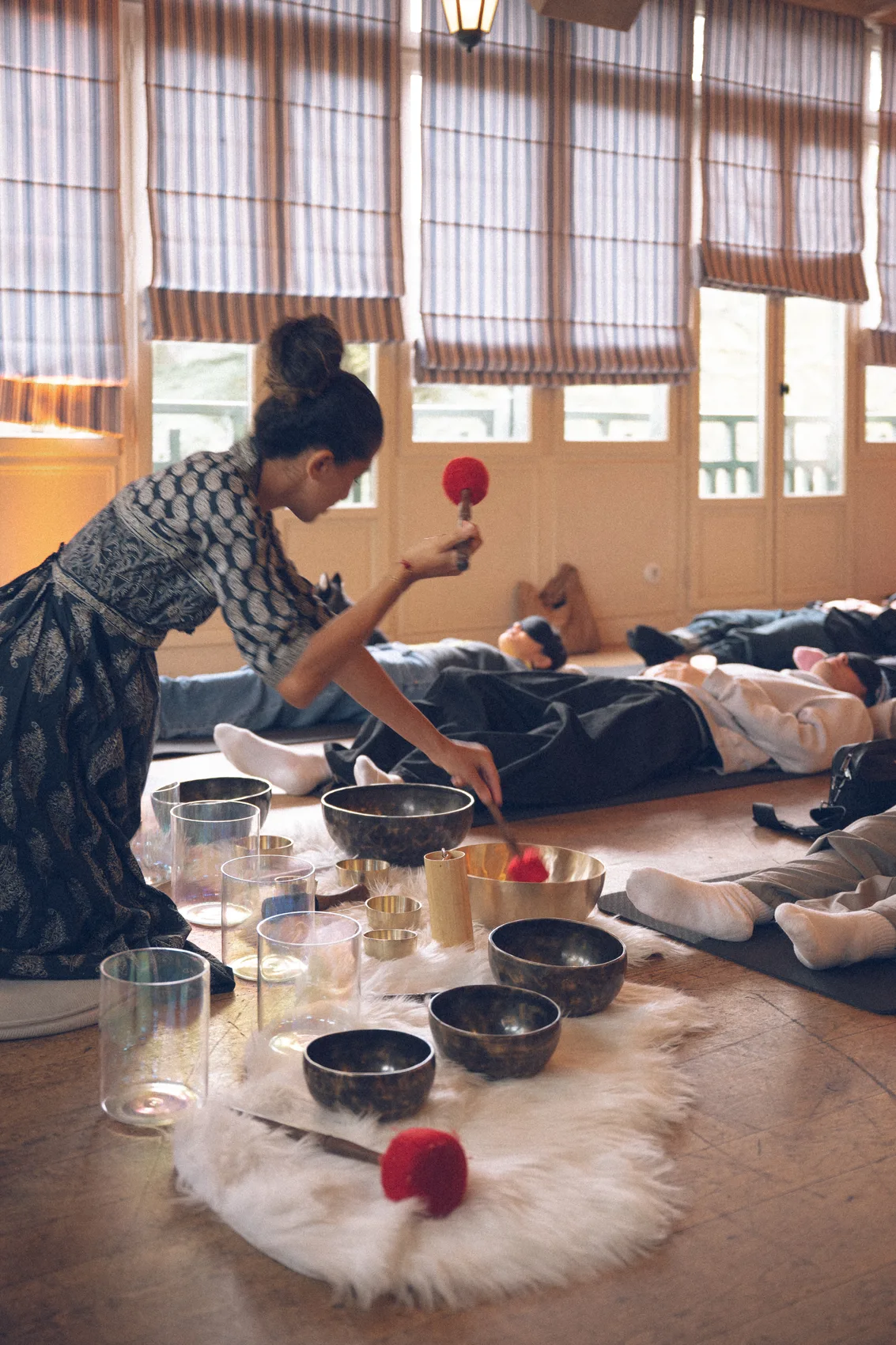
Eat lightly, drink some water, and avoid scheduling anything demanding straight afterwards: ideally you'll be able to wander a bit after, around Victor Hugo or along the Champs-Élysées, without having to rush. On clothing, think warm and loose. You stay lying still for an hour, and the body cools faster than you'd think: a jumper, socks, layers that are easy to add or take off. Leave your shoes at the door, switch your phone off. Nothing else is asked of you.
A word about nerves, because they're common and entirely reasonable: you don't need to be “ready” for a first sound bath. There's nothing to prepare mentally, no intention to set, no goal to reach. The studio is small and quiet, and the welcome happens without fuss. The hardest part, often, is simply deciding to come. The rest unfolds by itself.
What to wear, what to bring: the essentials
A quick reference before your first session.
| What to plan for | Detail | Provided on site? |
|---|---|---|
| Comfortable clothing | Loose, warm, in layers | No, come dressed that way |
| Socks | Feet get cold quickly | No |
| Mat & cushion | Settling on the floor | Yes |
| Blanket | To stay warm lying down | Yes |
| Eye mask | For the half-light | Yes |
| Water bottle | For a drink afterwards | Optional |
In short: come warmly dressed, and the rest is waiting for you at the studio.
Beginners' worries: what if I do it all wrong?
It's always the same apprehensions that come up, and they almost always fall away in the first few minutes. “I'll never manage to empty my mind.” Good news: that isn't asked of you. The sound occupies your attention for you, precisely so you don't have to fight your thoughts. “I'll fidget and disturb everyone.” You can move, scratch, change position. Everyone has their eyes closed and nobody notices a thing. “What if an emotion comes up?” It happens, and it's welcomed like the rest: without drama. You can breathe, put a hand on your belly, or simply let it pass.
The only thing to leave at the door is the idea of “doing it well”. There's no exam, no correct posture, no star pupil. If one day you catch yourself thinking about your shopping list mid-session, that's normal too: you gently bring your attention back to the sound, and that's that.
How does the hour run, minute by minute?
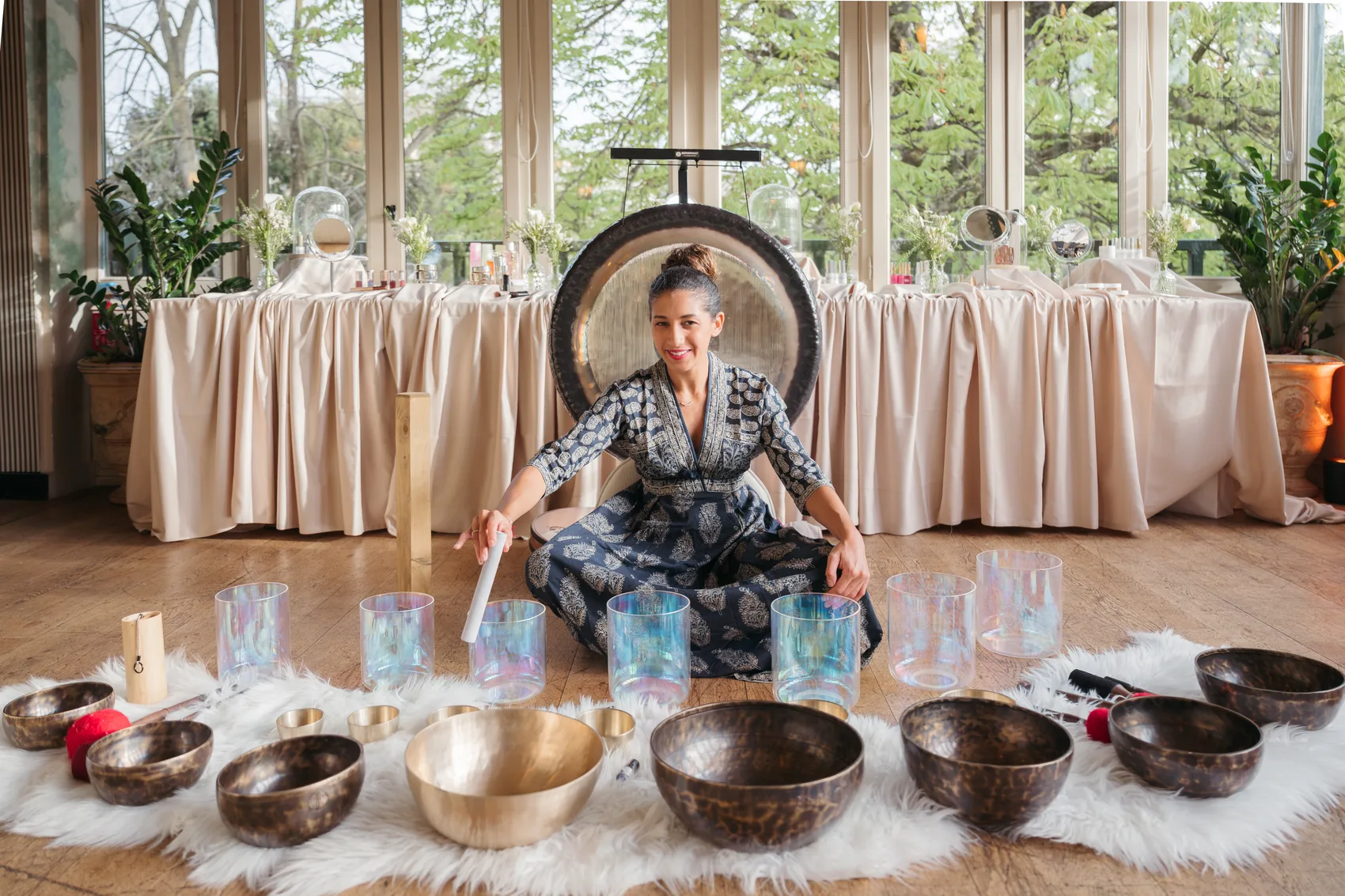
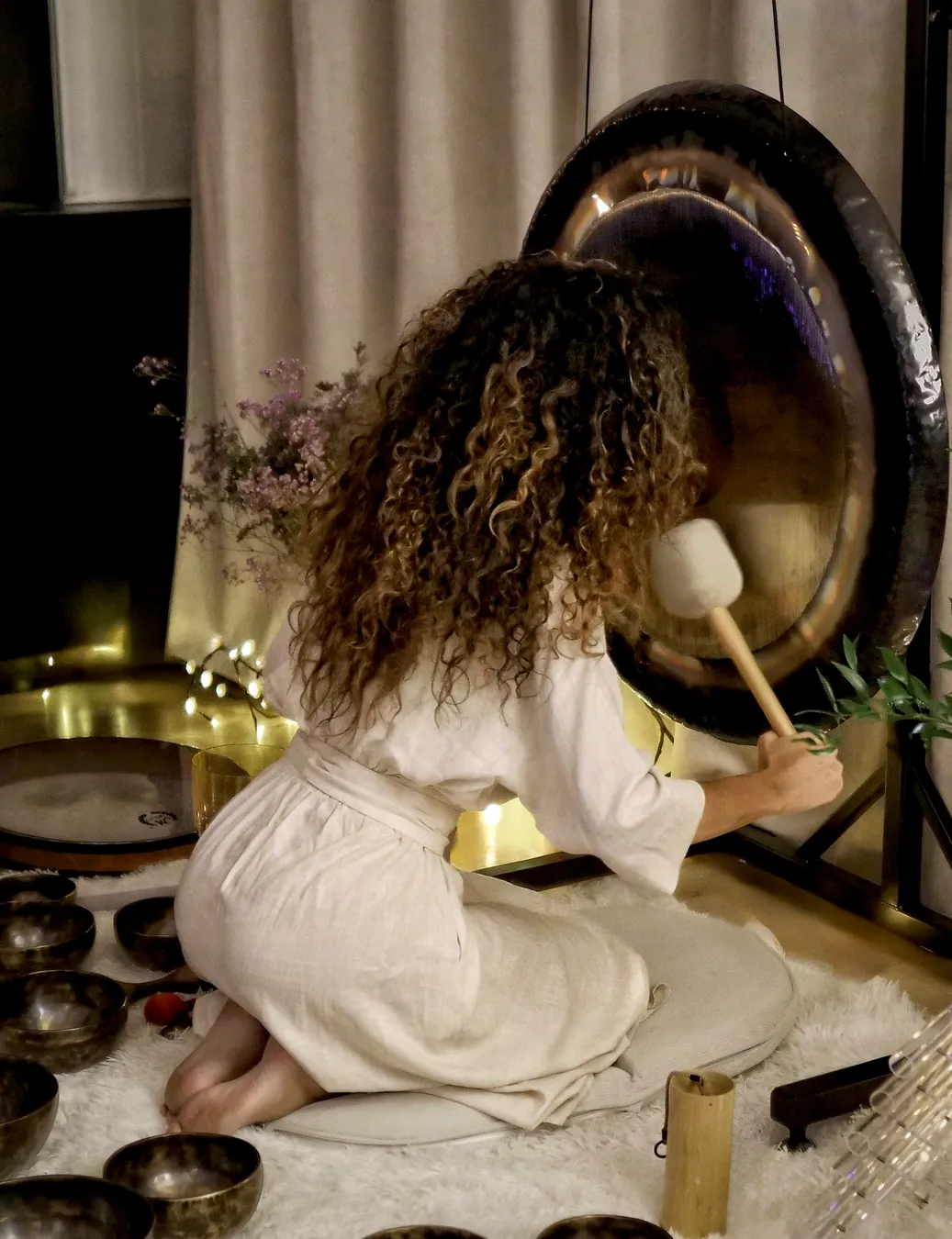
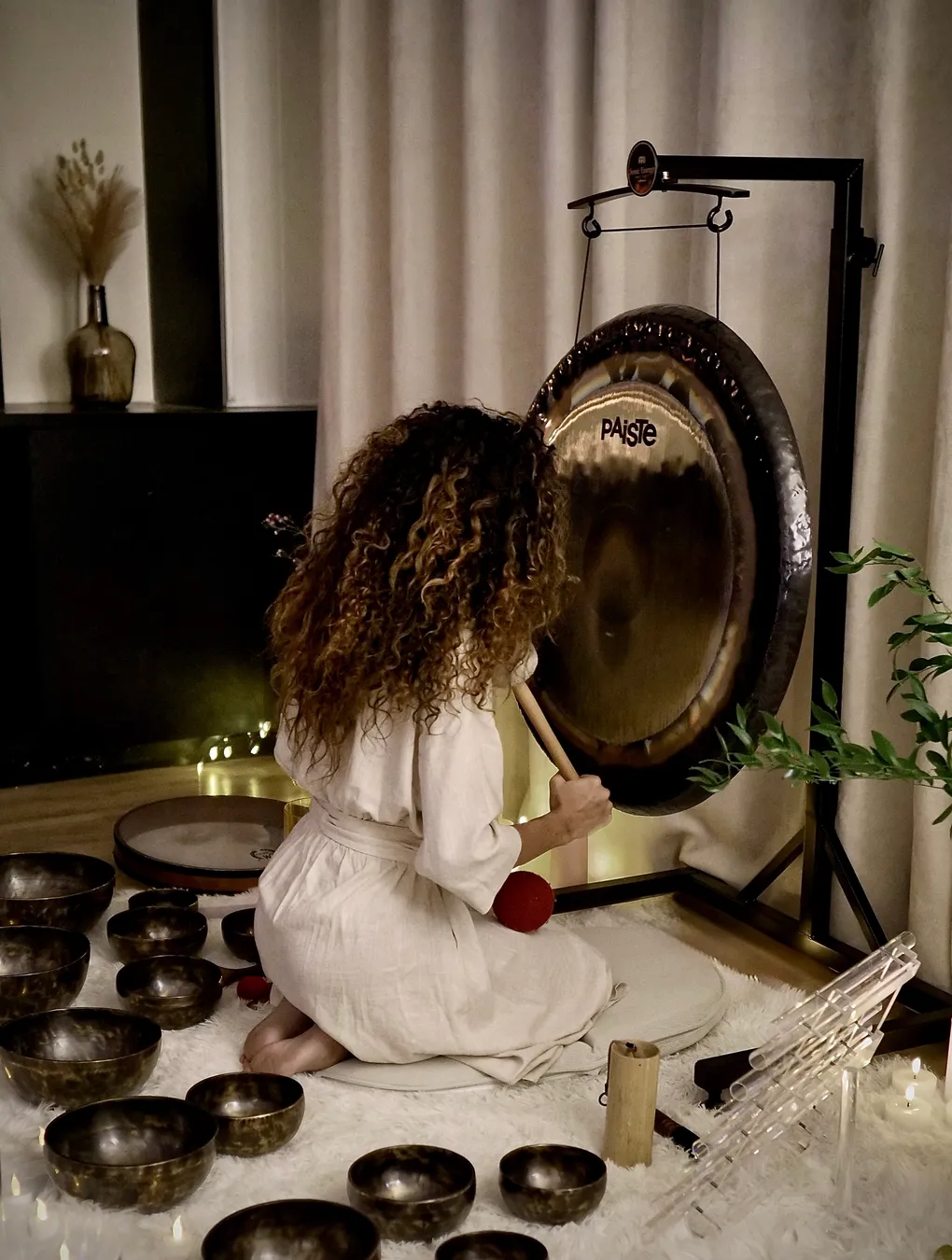
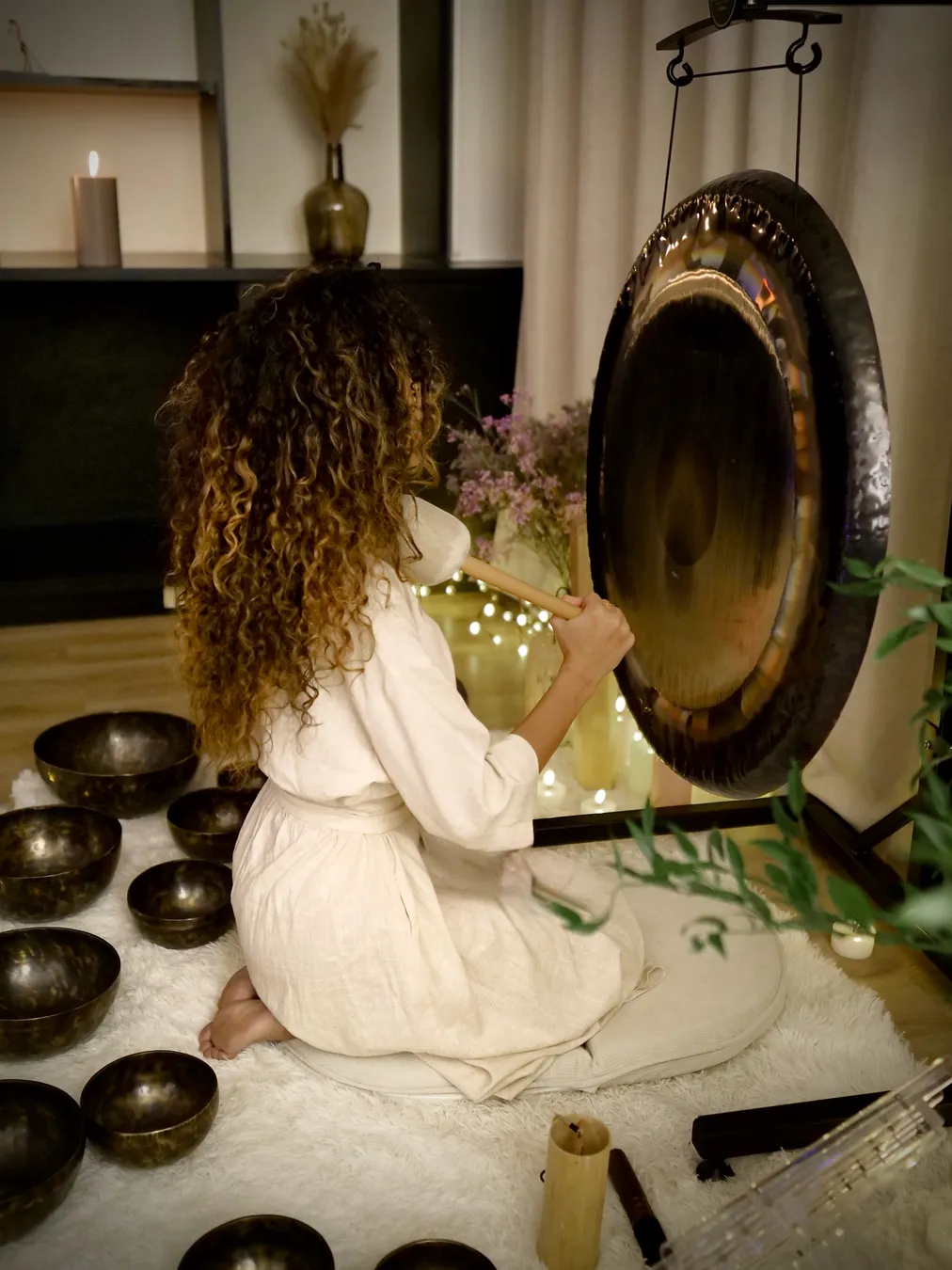
You're welcomed in silence and settled on the floor, on a mat, with a blanket and a cushion. A few words about how it runs, then the light lowers. The first sound rises gently, often a bowl, before the gong takes over. During the immersion, around 45 minutes, you have nothing to do: you listen, you breathe at your own pace, you let the vibration move. If a thought passes, let it pass. If you fall asleep, all the better. At the end, the sound comes down, and there's time to return gently before getting up. It's the same sequence described in the article what is a gong bath, if you want the basics.
What might you feel during a sound bath?
Here too, there's no typical experience. Many describe a pleasant heaviness, the sense of sinking into the floor. Some see images drift past, as on the edge of sleep. Others feel tingling where the vibration passes, or a diffuse warmth. Sometimes you doze off for a few minutes without even noticing. And then there are those who feel “not much” at the time, before noticing, once outside, an unfamiliar calm. All of it belongs to the same landscape.
A reassuring detail for newcomers: in an observational study on singing bowl meditation (Goldsby et al., 2017), participants new to the practice showed a more marked drop in tension than regulars did. That's encouraging, although it's a study with no control group, so take it as a signal, not as proof. In other words: not knowing isn't a handicap. It may even be an advantage.
“Nothing to reach, nothing to get right.”
And after the session?
Don't rush off. Drink a little water, take a minute sitting up before you stand. Many describe a sense of calm that settles mostly on the way home. The mechanism is explained in sound baths and the nervous system. If you can, avoid going straight into a business dinner or a busy evening: let the calm carry on. If you enjoy the experience, you can choose a card or a membership on the pricing page, or go for a more intimate format like the private session. No pressure: one visit is enough to form a view.
How long does the effect last?
It depends on the person and the moment. For some, it's a particularly peaceful evening and an easier drift into sleep. For others, a next day that sits a little less tight, shoulders not so high. We promise nothing precise, and we're wary of articles that announce durations by the stopwatch: the body doesn't work that way. What we observe are tendencies, not guarantees. If you want an effect that settles over time, it's regularity that counts, more than a single session.
Can I come with someone?
Of course, and many do. Coming as a pair is reassuring for a first time, even though each of you experiences the session separately, eyes closed. If you'd prefer a more intimate setting, the duo session is designed for exactly that. And nothing obliges you to debrief on the way out: sometimes shared silence says more than commentary does. Simply choose whatever puts you most at ease. There's no right way to start.
Key points
- Come in warm, loose clothing, in layers. The body cools quickly lying down; everything else (mat, blanket, cushion, eye mask) is provided.
- Arrive 5 to 10 minutes early at 26 rue de Bassano. No prerequisites, no technique, no meditation experience needed.
- A session lasts around an hour: welcome, introduction, ≈ 45 min of immersion, gradual return.
- Every sensation is normal: heaviness, images, dozing off, or “nothing” at the time. You can't get it wrong.
- The calm often settles afterwards, on the way home. Don't plan anything demanding straight after.