Short answer
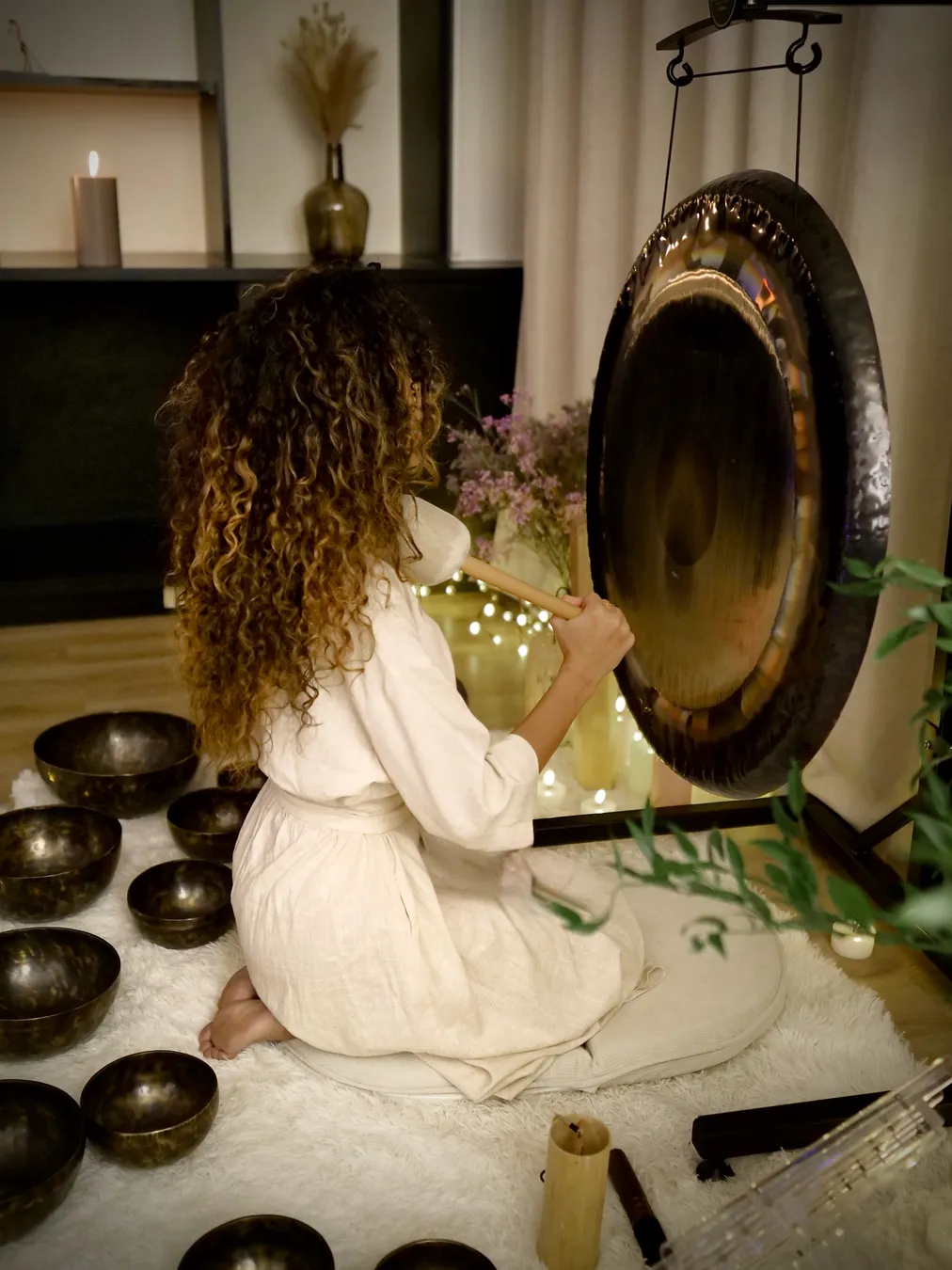
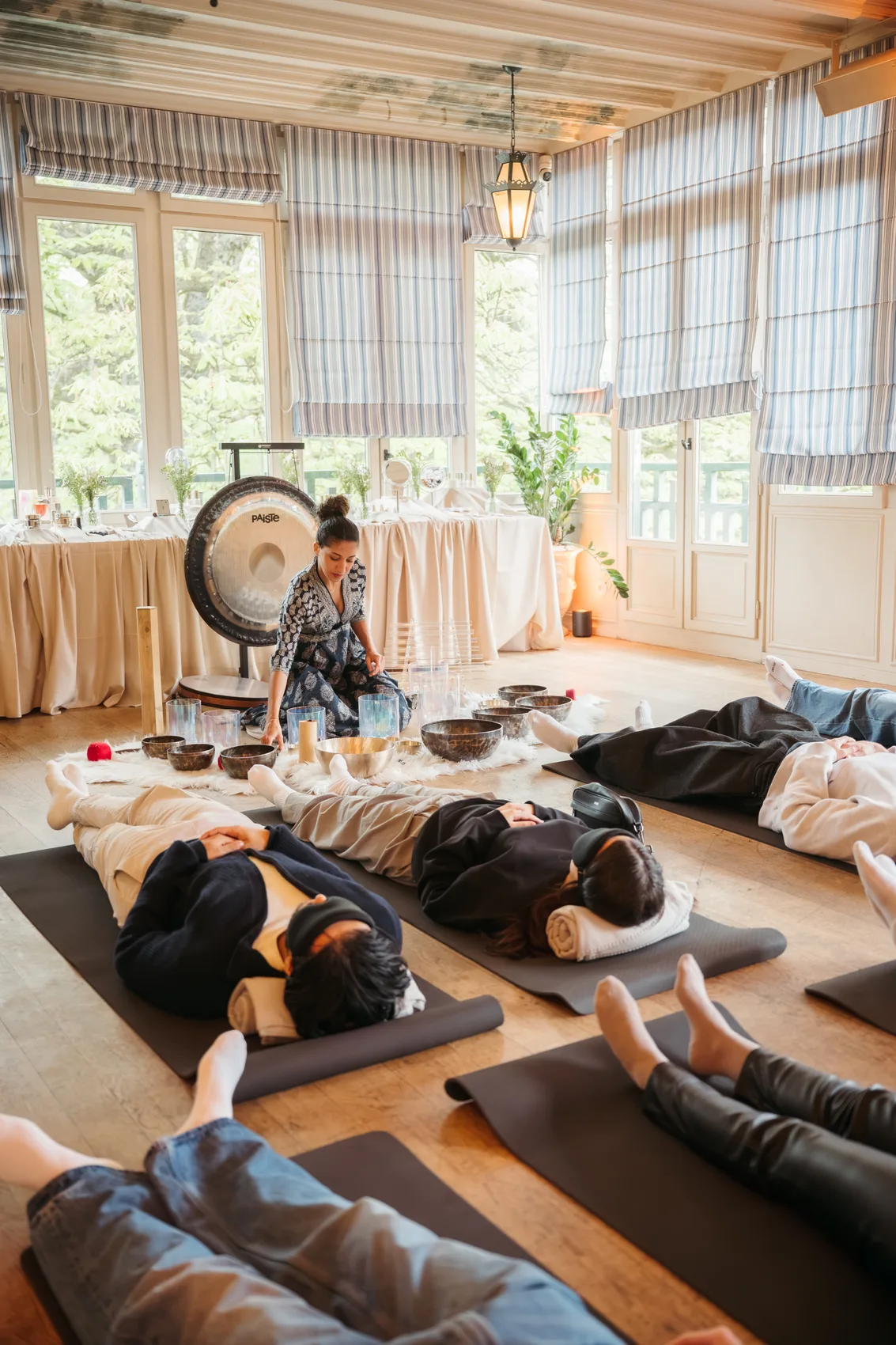
A gong bath can support relaxation and rest, which helps some people find sleep more easily. It doesn't “cure” insomnia and guarantees nothing: what it offers is an hour in which the body can finally come down. Lying still, the breath often slows by itself, and it's slow breathing that has the most solid scientific grounding for activating the “rest” nervous system. Many choose an end-of-day session so they can move straight into a calm evening. At Résonance, at 26 rue de Bassano, allow around an hour, from €39 for the group session.
If you're reading this at 11 pm with the lamp still on, you already know what we're talking about. Sleep isn't something you decide. You don't fall asleep on command, especially when the day never really slowed down. And that's precisely where sound can play a part: modest, but real.
Why is it hard to fall asleep?
Very often the body stays in action mode long after the day has finished. The mind keeps turning, the breath stays high, the shoulders don't drop. Falling asleep requires the opposite: a body that shifts into recovery mode. And we don't always give it the chance. We go from screen to bed without transition, hoping sleep will come by itself. Sometimes it does. Often, it doesn't.
Why does stress delay falling asleep?
The body doesn't distinguish a real threat from an end-of-day irritation. A piece of work running late, a conversation going round in circles, and the “action” branch of the nervous system stays engaged: heart rate a little high, muscles tense, vigilance in the background. In that state, falling asleep becomes difficult, not through unwillingness, but because the body hasn't received the signal that it can lower its guard. It's that switch, from alert to recovery, that the article sound baths and the nervous system describes in detail. Until it happens, you can go to bed early without sleeping any better.
How can sound support sleep?
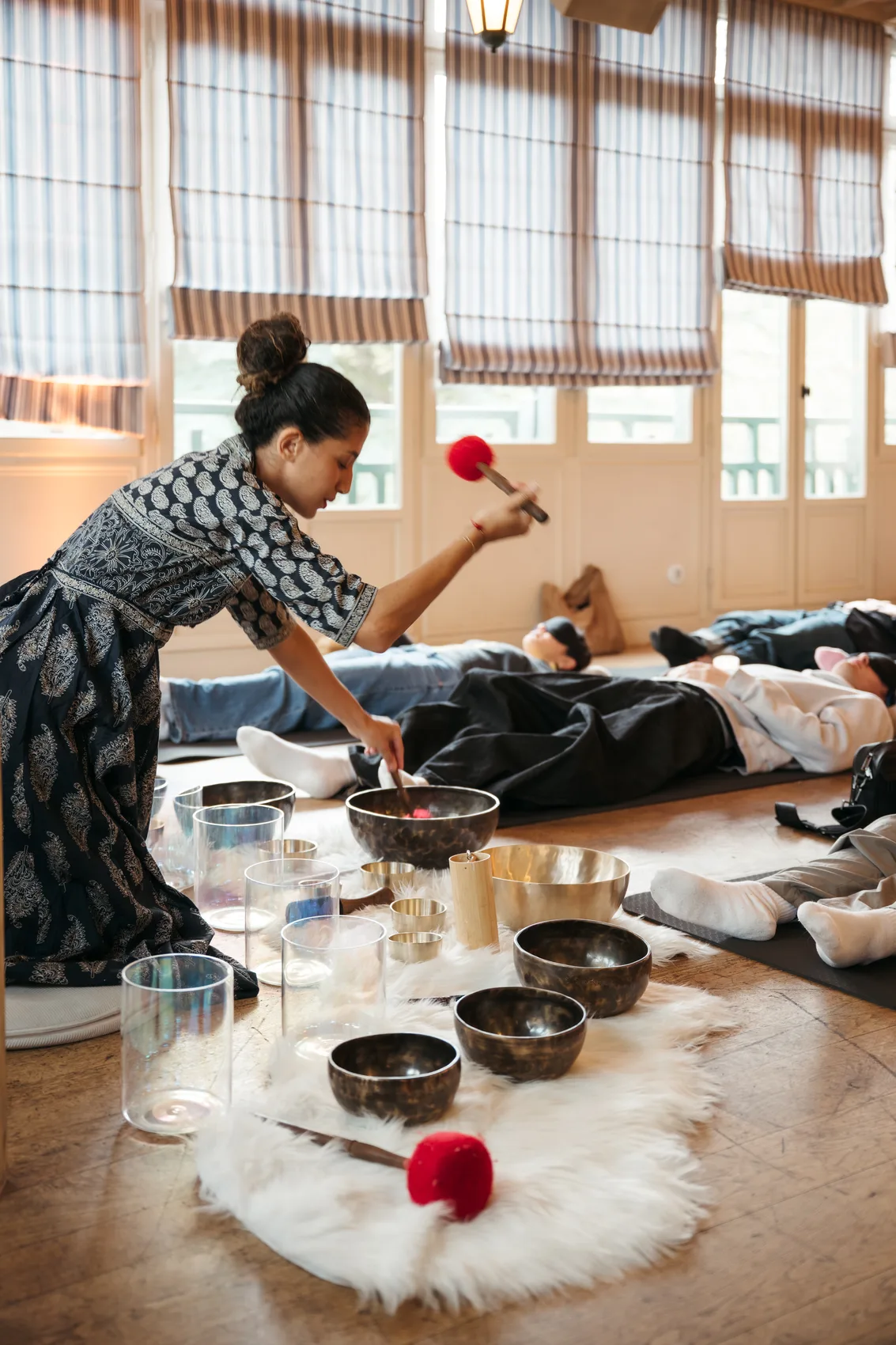
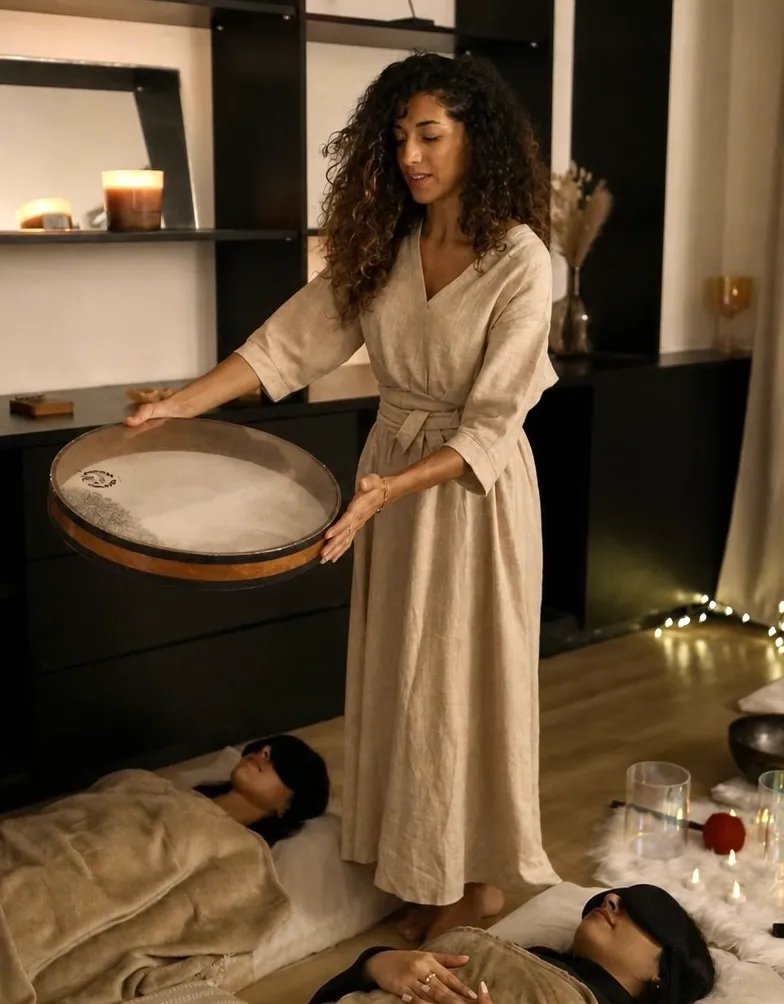
A gong bath doesn't put you to sleep, at least not the way medication does. It prepares the ground. By giving attention a stable bed of sound to follow, it helps the body leave the alert state. Deprived of any reason to stay on guard, the nervous system lets go. The relaxation begun during that hour lying down doesn't stop at the studio door: it carries on, and a relaxed body finds sleep more easily when evening comes.
This approach is part of sound therapy in the broad sense: nothing is forced, the conditions are created. For more personal support, some people prefer the private session, where there's time to talk about what's keeping you awake.
What sound can do, and can't
An honest reckoning, because this subject attracts a lot of over-promising.
| A gong bath can… | A gong bath cannot… |
|---|---|
| Support relaxation and rest | Guarantee a full night's sleep |
| Help release the evening's tension | Treat established insomnia |
| Offer a transition before bed | Replace medical care |
| Encourage a calmer drift into sleep | Promise the same result for everyone |
If your nights are persistently difficult, a health professional is still the right person to talk to.
What the research says about sound and sleep
You read a lot of promises on this subject. We'd rather stay measured about it, because the credibility rests on that.
On meditation and sleep, the NCCIH (the American health agency for complementary approaches) reports that a 2019 analysis of 18 studies (1,654 participants) found that mindfulness meditation improved sleep quality more than simple educational programmes did, but without outperforming reference approaches such as cognitive behavioural therapy or exercise. A possible help, then, not a superior solution. And the NCCIH adds that much of the research on these topics remains preliminary.
The most tangible lever isn't sound itself: it's breathing. A 2022 meta-analysis (Laborde et al.) shows that breathing slowly, at around six cycles a minute, increases vagal control of the heart, on the parasympathetic side, the resting side. A gong bath imposes no breathing pattern; but lying down, with nothing to do, it often slows by itself. That's part of the mechanics of the calm you feel afterwards.
And here's the gap. The sound bath itself has never been put through solid clinical trials on sleep. So we don't claim it “treats” anything. What we observe, session after session, is a more relaxed body on the way out, and a relaxed body falls asleep more willingly.
We prefer that honesty to the fashion for “sleep frequencies” and miracle numbers. Calm is prepared; it isn't downloaded.
“The body doesn't need convincing, only putting in the right conditions.”
An evening ritual to prepare the nervous system
A session helps more if the evening that follows doesn't undo it all. A few simple things extend the state: lowering the lights an hour before bed, turning off the screens that call the body back to vigilance, keeping the phone out of the bedroom. A herbal tea, a warm shower, a few long breaths (short in, slow out) are often enough to send the right signal. The idea isn't to add another obligation to the day, but to make a gentle slope down into sleep instead of a wall. An end-of-day session fits perfectly into that ritual: it becomes its first movement.
How do you get the most from a session, for sleep?
Choose an end-of-day slot so you don't have to rush off afterwards. At Résonance, the Thursday and Friday evening sessions, like the weekend ones, suit that turning point well. Bring warm clothing: body temperature drops when you lie still. And above all, don't plan anything demanding afterwards: no business dinner, no late screens. Let the calm carry on. If you're coming for the first time, the article what to expect at a first sound bath will save you the small hesitations at the start, and the safety & care page lists the few contraindications to check.
Is one session enough, or do you need regularity?
Both answers are true, at different scales. A single session offers a real respite: a calmer evening, sometimes an easier night. But sleep runs on habits, not exceptions. Coming back regularly means teaching the body to come down again, and what was an event becomes a reflex. That's why many people move, after a few visits, to a card or a membership: not out of obligation, but because the evening appointment ends up mattering. There's no rush; start with one visit and see.
Key points
- A gong bath can support relaxation and rest, which helps some people fall asleep more easily. It is neither a sleeping pill nor a treatment for insomnia.
- Stress keeps the body in “action mode”; falling asleep means switching into “recovery mode”. Sound helps that switch.
- The best-evidenced lever is slow breathing (~6/min), which increases parasympathetic activity, and it settles in naturally when you're lying down.
- Research on meditation and sleep is encouraging but preliminary; the sound bath itself has no solid clinical trials.
- An end-of-day session, followed by a low-key evening, gets the most out of the effect.